Welcome:

Welcome to my world..............

Friday, 17 February 2012

And again....

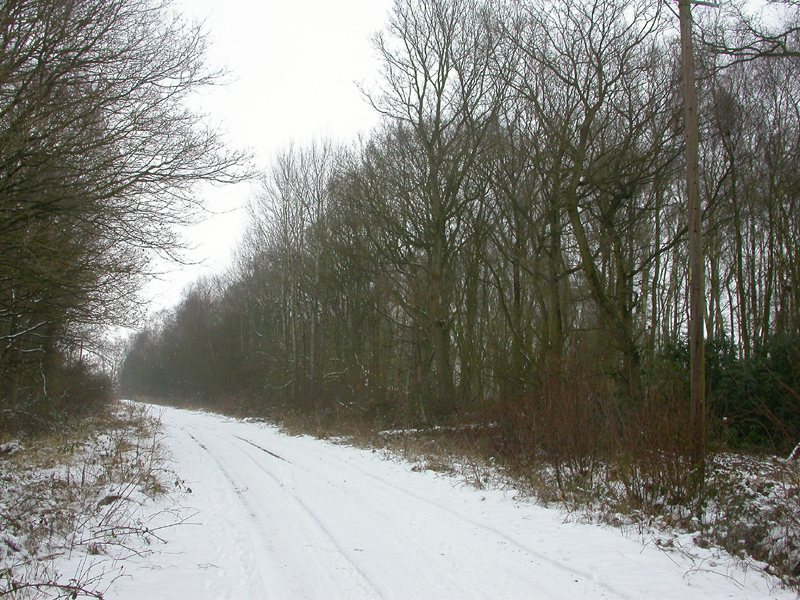
Another mild night so tried the track that runs west-east in Low Wood, Sessay, and in under two hours managed a reasonable haul, mainly using the 160MVB bulb over a white sheet: 52 Tortricodes alternella, six March Moth, nine Pale Brindled Beauty, four Spring Usher, two Dotted Border and a Chestnut.
Dotted Border
Chestnut

Wednesday, 15 February 2012

First mild night for a while...

With the increase in daytime temperature and a reasonable, if breezy, forecast for the evening, a couple of hours with the 160MVB over a sheet at Pilmoor beckoned.  The temperature remained at 8C, although there was still traces of rutted snow on the track, and the track was rather wet underfoot.

In addition to the lamp and sheet, I used the 2 x 22w Gladiator and promptly managed to blow one of the bulbs, but it still did ok with just the one bulb.  The total catch in 2 hours early evening produce seven Tortricodes alternella, 15 Pale Brindled Beauty, and four Spring Usher.
Pale Brindled Beauty
Spring Usher

Tuesday, 7 February 2012

A wander round a wintery Pilmoor

Having safely received my written permissions for trapping from Natural England and the landowners for Pilmoor, I decided to have a walk round the SSSI and old railway track.  A cold crisp morning, still below freezing, which felt worse once the mist lifted to hide the sun, and with up to three inches of snow blanketing the heath.  


The best bird was a Red Kite flying over on motionless wings, while a flash of orange showed an amorous male Goldcrest trying to impress a female while circling her on a silver birch trunk.  Plenty of Long-tailed Tits, none with white heads, despite looking....dozens of Siskins feeding on the birch buds, and the odd Reed Bunting  acting sentinel on the tops of trees.


The most impressive sight of the morning, was the number of Seven-spot Ladybirds huddling on the dried-out umbellifers and on a tall thistle; at least 40 were counted.
Seven-spot Ladybird

Monday, 6 February 2012

You can't beat a good book....

Another year gone and more magazines in need of binding…..  A sobering thought that I have been subscribing to British Birds since 1975 (37 years), and have amassed decent bound copies back to 1946.  With trips to Morocco and Cyprus in 1978, 1982 and 1983, I developed an interest in the area, and took Sandgrouse from the early days.  I suppose Birding World comes next, having subscribed halfway through the first year, now in its 25th Volume.  I subscribed right from the start with British Wildlife, although lapsed for several years, volumes 7 - 10, but am current again, and managed to get the missing copies.  Atropos, a relative newcomer, but is probably the most eagerly anticipated.

British Birds                1975 – date, 70 volumes, back copies to 1946
Sandgrouse                 1980 – date, 33 volumes unbound
Birding World              1988 – date, 25 volumes
British Wildlife             1990 – date, 23 volumes
Atropos                      1996 – date, 8 volumes

Several other magazines have come and gone, but I feel that those currently on subscription are the leading magazines in their field, and I eagerly await them dropping through the letter box.  Of course, the main problem in being a bit of a bibliophile is storage, with at least 75 feet of shelving just for natural history books!  There are a few more of reference type books and biographies, and there are still a few boxes stored in the loft which have yet to see the light of day in Yorkshire.

The cost of books is a major concern these days, and several series I am collecting are about to publish new volumes in the £75 to £150 range.  However, probably the best value series is The Encyclopedia of Swedish Flora and Fauna which aims to cover c.40,000 species, and although in Swedish with English summaries, is fantastic value at around £50 per volume; I have the ones covering the moths so far, and also the hoverflies and one or two selected others.  Perhaps my favourite book is the Dragonflies of Ireland, with stunning photographs by Robert Thompson, and heavily subsidised by the Irish authorities; it was so good, I bought two!

Books that have appreciated greatly or were picked up for reasonable amounts would include the Collins New Naturalist book on The New Forest, bought in Bournemouth the day I was offered a job in Dorset, and is currently worth ten times what I paid for it; the Jenni and Winkler Moult and Ageing of European Passerines, first editions recently sold for 20 times what I paid for it.  A bargain at a boot sale got me a copy of the The Flies of the British Isles by Colyer and Hammond, which at £2 for a first edition with a small library stamp and fine dust-cover could easily command much more than that, while being a useful reference source.

I just do not believe that the internet and digital copies will ever fully replace good books.  Although I had a copy of the Ray Society British Tortricoid Moths on CD, I jumped at the chance of buying both ‘real’ volumes early in 2011.  You cannot beat the feel and smell of a good book, and if selective, can be a good investment.  I am sure I have will have a much better return on my books than similar outlay invested in the stock market, and more importantly have had the benefit of enjoying them and referring to them during that time.  Unfortunately, like buses, good books all come along at once!

Thursday, 26 January 2012

Some good arachnid records!

Having found the extremely good Spider Recording Scheme website at http://srs.britishspiders.org.uk/ I felt inspired to have a go at identifying a handful of photographs of spiders I had accumulated over the last few years.  I had a go at four spiders and a couple of harvestmen.  The first response I got confirmed that most were incorrectly identified and that the harvestmen needed to go to another recorder.  Once I got all of the responses back, I had a bit of a shock.  One of the harvestmen, which I had photographed on the wall of the house here in Langthorpe back in January 2008, was a female Opilio canestrinii which was not only new for Yorkshire but possibly only the second UK record; I have been advised by Peter Harvey who runs the SRS scheme, that following the first in Lea Valley in 1999, the next was in Matlock in 2009, then with 4 in 2010 and 9 in 2011 from various other locations. 
Opilio canestrinii, NEW for Yorkshire

Opilio canestrinii
Another spider of interest was a bright yellow Araneus marmoreus var. pyramidatus seen at Pilmoor which was only about the 2nd VC62 record in the last 30 years.
Araneus marmoreus var pyramidatus
One spider I did not have a photo of, but knew rather well was Pholcus phalangioides.  I first came across this one back in 2003 in Dorset, when idly perusing the internet and found a request for sightings of this species on the Dorset Environmental Records Center website.  I looked up, and blow me down there was one of these with a family of spiderlings in an untidy little web on the ceiling.  They are quite distinctive, and when touched they tend to spin round madly.  As it happens I noticed them again when we were renting in Hartwith near Harrogate, and again several times in the house here in Langthorpe.  It turns out, it is a new record for VC65!


Platybunus triangularis was the other harvestman photographed, which was at Low Wood, Sessay, on 12 June 2011, and appears to be the first recent record in the last 20 odd years for VC62.
Platybunus triangularis

The other photos were of more regular species and I include them just for completeness.  I think it just goes to show that spiders are vastly under-recorded and there is plenty of scope for making discoveries...as long as you can identify the little buggers!
Araneus quadratus, Windmill Farm NR, Lizard, Cornwall, VC1

Araneus diadematus, Windmill Farm NR, Lizard, VC1

Pisaura mirabilis, female with egg sac, Holm Bushes near Middlemarsh, VC9.  A new record for 10km square.


Tuesday, 17 January 2012

Last year's top 20 macros...

A very unscientific look at 2011 compared with the previous two years threw up some quite interesting statistics.  There are obvious drawbacks with such a small data set, and even taking into account 25% more effort through the year, the spread of trapping sites and dates was fairly consistent.  The 20 most numerous macro species were, in most cases, considerably more numerous than the average of the previous two years.

There were declines noted in 4 species, Common Quaker and Small Quaker down due to the extremely good numbers of Spring 2010; Large Yellow Underwing was well down on 2010, but similar to 2009, as was Mottled Beauty which was only fractionally down on the average. 

The next few slight increases may be accounted for mainly by the extra effort, and then there are some dramatic figures, more than doubling for Brown Silver-line, Clouded Border and Yellow-tail.  Next, Flame Shoulder, Common Footman, Dark Arches and in particular Smoky Wainscot and July Highflyer increased greatly, and the amazing numbers of Four-dotted Footman was also the third most common species which in itself is remarkable.

Taxon Vernacular 2011 2010 2009
Ave
2009/10
% change
Orthosia cerasi Common Quaker 272 530 135 333 -18.2
Noctua pronuba Large Yellow Underwing 190 283 180 232 -17.9
Orthosia cruda Small Quaker 107 201 48 125 -14.1
Alcis repandata Mottled Beauty 217 133 303 218 -0.5
Campaea margaritata Light Emerald 122 39 187 113 8.0
Pheosia gnoma Lesser Swallow Prominent 116 71 99 85 36.5
Orthosia incerta Clouded Drab 188 223 51 137 37.2
Conistra vaccinii Chestnut 107 112 22 67 59.7
Xanthorhoe montanata Silver-ground Carpet 142 81 69 75 89.3
Idaea aversata Riband Wave 124 39 89 64 93.8
Petrophora chlorosata Brown Silver-line 175 112 62 87 101.1
Oligia strigilis agg. Marbled Minor agg. 112 69 39 54 107.4
Euproctis similis Yellow-tail 131 38 88 63 107.9
Lomaspilis marginata Clouded Border 194 46 86 66 193.9
Ochropleura plecta Flame Shoulder 136 39 35 37 267.6
Eilema lurideola Common Footman 562 119 142 131 330.7
Apamea monoglypha Dark Arches 109 42 7 25 344.9
Mythimna impura Smoky Wainscot 122 24 22 23 430.4
Hydriomena furcata July Highflyer 220 23 33 28 685.7
Cybosia mesomella Four-dotted Footman 258 0 13 7 3869.2


Four-dotted Footman
The Four-dotted Footman trapped in 2011 were all in the Pilmoor area:

Pilmoor wood SE SE4672 1 07-Jun-11
Pilmoor wood NE SE4673 1 07-Jun-11
Low Wood (E), Pilmoor SE4772 5 14-Jun-11
Sessay Wood, Pilmoor SE4773 14 14-Jun-11
Pilmoor wood SE SE4672 1 dead 29-Jun-11
Sessay Wood, Pilmoor SE4773 82 02-Jul-11
Low Wood (E), Pilmoor SE4772 21 02-Jul-11
Pilmoor wood NE SE4673 84 10-Jul-11
Sessay Wood, Pilmoor SE4773 42 14-Jul-11
Pilmoor wood SE SE4672 7 21-Jul-11


Wednesday, 11 January 2012

A mild night was too tempting.

After a run of several mild nights, and 100% cloud cover shielding the almost full moon, I was tempted out to spend an hour or so with the 160MVB over a sheet at Pilmoor.  So while not expecting very much, the odd moths fluttered to the light between 1805 and 1900, but no more thereafter, so gave up gracefully.

The total catch was four Tortricodes alternella, a Winter Moth, Spring Usher and two Chestnut.  To start the year off with a photo of possibly the least inspiring geometrid moths, especially as it is one from the dark end of the spectrum.....
Spring Usher, Pilmoor wood, 10 Jan 2012
As a brief footnote, Charlie has since mentioned that this is the 4th earliest Yorkshire record, and two others were this winter too.