Welcome:

Welcome to my world..............
Showing posts with label Beetles. Show all posts

Thursday, 1 October 2020

Disaster recovery....!

It is obvious that I have neglected updating the blog and I am writing this in December 2019: following a mishap with a glass of milk and my laptop I have had a lot of catching up to do.  It was fortunate I had a fairly recent backup and in getting a replacement laptop I have spent a couple of months reconfiguring it and restoring as much as I could.  I don't think I have lost much data June/July, most re-entered from paper records, and a small number of photos are gone, fortunately the most significant already saved elsewhere.  A far more strict backup regime will be in place from now!

Botany themed meeting walks at Swillington Ings and South Gare added dozens of plant species, more moth trapping at Brafferton and a night at Ashberry NR both in VC62, a Shieldbug and Grasshopper course at Formby on a stormy Saturday still produced the goods, and casual day visits to Brafferton and Pilmoor.  Rather than add a lot of text I will just provide a selection of photos from the last few months.

Green Tortoise Beetle

Brown Hawker

Ruddy Darter, newly emerged from exuvia

Small Copper

It was worth letting this horsefly bite me to get a photo of those amazing eyes!
Notch-horned Clegg

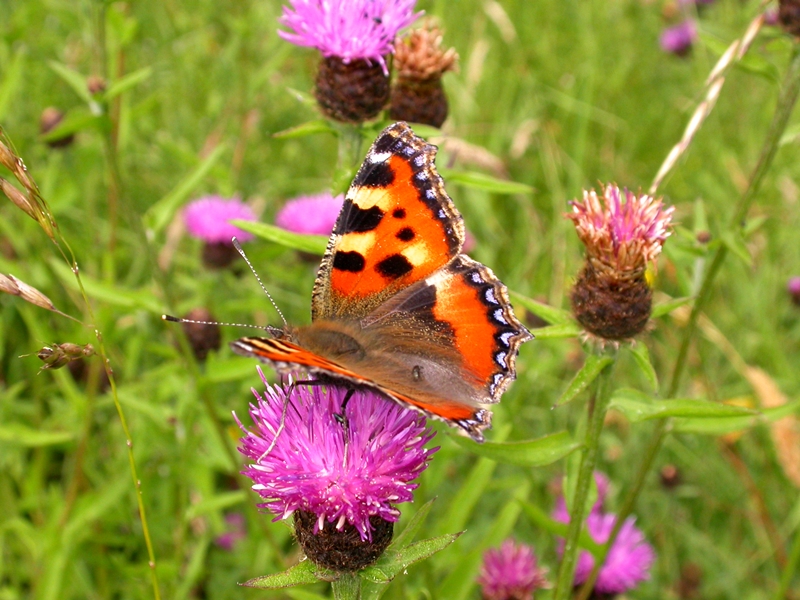
Small Tortoiseshell

A fine portrait of one of my favourite damselflies.
Banded Demoiselle, male

Scorpion Fly

A couple of interesting micros at Ashberry Pastures NR (VC62), both scarce in the County.
Adela croesella

Ancylis achatana

Twin-spot Carpet

 The pale band near the tip of the antennae is diagnostic.
Bronze Shieldbug, late instar, Pilmoor

 This tiny weevil is only 5-6mm in length and closeup looks very distinctive.
Weevil sp.

Figwort Weevil, Brafferton, 7 Sep 2019

The following is an Ichneumon parasitic wasp, one of two individuals attracted to light on different days, and apparently new to Yorkshire.  Very little is known of the species, on what it preys or its full distribution; identification confirmed by Gavin Broad (one of the authors of the RES handbook on Ichneumon wasps)..
Himerta sepulchralis, Brafferton, VC62, 14 Sep 2019

Scarce Footman., Brafferton, VC62, 3 Aug 2019

Pine Hawkmoth, Brafferton, VC62, Aug 2019

Later in August I was lucky enough to catch up with a Maidens Blush, a southern moth moving northwards.  I had caught one earlier in the year which I glimpsed as it made a dash for freedom, so was pleased to catch another.
Maidens Blush, Brafferton VC65, 25 Aug 2019
Maidens Blush, Brafferton, VC62, 25 Aug 2019

Wednesday, 3 July 2019

Second half of June

A bit of a catch up with several visits to new sites and a new moth at Sun Beck.  A bout of dog-sitting on the weekend of 22/23rd June gave me the opportunity to have a stroll round Formby Point in Lancashire.  Several new plants were seen including Hound's-tongue Cynoglossum officinale  and Japanese Rose Rosa rugosa, and a number of amorous Dune Chafer Anomala dubia.
Cynoglossum officinale (Hound's-tongue)

Ononis repens (Common Rest-harrow)

Anomala dubia (Dune Chafer)
Three new plants were identified in the carpark at work in Roecliffe: Weld Reseda luteola, Golden Melilot Melilotus altissima and Great Lettuce Lactuca virosa.


Friday night and at last a nights trapping at Sun Beck Wood, Brafferton Spring. 189 moths of 53 species, two new for site, and by far the best was an adult bagworm moth with very few records in the north of Yorkshire, a Taleporia tubulosa.
Taleporia tubulosa
Another botanic walk with the Wild Flower Society at Swillington Ings east of Leeds added a handful of new species on what was the hottest day of the year so far.  Photographically it was a bit of a nightmare and I struggled to get any photos of any value.  Docks were well represented with Greek Dock Rumex cristatus, Water Dock Rumex hydrolapathum, Golden Dock Rumex maritimus, and Marsh Dock Rumex palustris.  A very rare rush Great Soft Rush Juncus pallidus, originally from Australia and New Zealand, at one of its very few sites in the northern hemisphere, an escapee /introduction.  One of the scarcer flowering plants was the diminutive Lesser Centaury Centaurium pulchellum.
Alder Beetles

Pilosella aurantiaca (Fox-and-Cubs)
Finally a late morning walk in the wind at South Gare near Redcar on Sunday was a revelation although not conducive to macro photography.  For what is mainly a man-made site in an industrial area the array of plants was outstanding.  There were some naturalised garden plants growing wild here, such as Sweet William Dianthus barbatus, Common Snapdragon Antirrhinum majus, Cypress Spurge Euphorbia cyparissias and the rather exotically named Elephant-eared Saxifrage Bergenia cordifolia.  A scarce plant found was Purple Milk-vetch Astragalus danicus.
Astragalus danicus (Purple Milk-vetch)

Bergenia cordifolia (Elephant-eared Saxifrage)

Euphorbia cyparissias (Cypress Spurge)

Lagurus ovatus (Harestail Grass)

Dianthus barbatus (Sweet William)


Monday, 17 June 2019

A few insect offerings from Sun Beck

Following yet another potential nights moth trapping thwarted by heavy rain I made use of the morning sun to have a walk around Sun Beck wood, Brafferton.  My quest for putting in the effort to see  species other than birds and moths really paid off and several new insects were noted.  

There were dozens of these bright yellow sawflies, but this one allowed close approach, enough to identify it as Turnip Sawfly. 
Athalia rosae (Turnip Sawfly)

Chrysopilus cristatus
A rather subdued wasp that was initially lying on its side in a buttercup eventually dragged itself to a more photogenic pose.  
Odynerus spinipes (Spiny Mason Wasp)
Several beetles were seen including the diminutive yellow and black 14-Spot Ladybird, and the dark form of .a click beetle Denticollis linearis.

14-Spot Ladybird

Denticollis linearis
There were at least 15 small shieldbugs which I did not recognise, assuming they were early instars of a more common species.  On checking the photos on return it was plain to see they were all adult Woundwort Shieldbugs, another new species for me and right at the northern edge of their range.
Eysarcoris venustissimus (Woundwort Shieldbug)
A very small insect with intricately patterned wings made identification rather difficult.  Having initially offered it for identification on the Diptera forums I was quickly dispatched by the resident experts to look at Hemiptera.  A peruse in that direction it was clear that it was actually a lacehopper, probably Cixius nervosus.

Cixius nervosus
It was inevitable that several moths were seen, including a Nemaphora degeerella which eventually settled, and the diminutive Micropterix aruncella, a moth I have only seen twice before.  Other moths seen were a Celypha lacunana and a Silver-ground Carpet.
Micropterix aruncella

Nemaphora degeerella
Celypha lacunana
As a footnote, while looking through photos from previous years for any unidentified species threw up a bug from 2015 that with a quick search proved to be a Tree Damsel Bug, a southern species at the northern edge of its range.
Himacerus apterus (Tree Damsel Bug)

Sunday, 18 November 2018

Alder Leaf Beetle

A line of alders at Pilmoor (VC62) were noted as being totally decimated on 15 September 2018 by what appeared to be at least 100 small shiny beetles. Having seen a similar photo on the internet I was alerted to the fact that they were Alder Leaf Beetles Agelastica alni, that were considered extinct in the UK until 2004, when they suddenly reappeared in Manchester presumably as an accidental import on alders.  It has since spread to Lancashire, South and West Yorkshire and also appeared in Hampshire.  On checking my records my first photos of the culprit were taken on 20 August 2018.  The first photo below is a slightly out of focus phone photo but does indicate the scale of the damage to the alder leaves. I do recall seeing them here in at least one previous year (probably 2017) but despite looking through my photos I cannot find any evidence.

Alder Leaf Beetle on alder, Pilmoor, VC62, 15 Sep 2018

Alder Leaf Beetle on alder, Pilmoor, VC62, 20 Aug 2018
On sending the record to the YNU Coleoptera Recorder he was kind enough to advise me of the current distribution in the Yorkshire database, and so it would appear to be new to VC62.


Sunday, 17 December 2017

More leaf-mines...


My new-found interest in peering at leaves for larval feeding/pupating evidence has raised some good-hearted and playful derision from some....

I can take it..... especially when I keep adding new species to my list, some from photos as far back as 2010 which have sat in the 'to be identified' file until now.  The two below are from this file.

The first is obviously an Eriocrania species and I identified it from the following points:

1/  The mine is on Birch.
2/  The mine starts towards the middle of the leaf and broadens out to the leaf margin.
3/   Long strands of frass.
4/  The mine is untenanted.
5/  The data of the vacated mine is early June.

This first three points combined would make it either Eriocrania salopiella or E. sparrmannella, and the last two points suggest it is the earlier of the two species, salopiella which mines May to early June, rather than sparrmannella which mines June to July.  Both are scarce moths, indeed salopiella has a handful of VC63 records and no recent ones in VC62 and 64.  Charlie Fletcher the CMR has commented "The earliest sparrmannella mine we have on the database is 18th June so I agree this is likely to be salopiella, however I think spring was early in 2012 so it's difficult to be certain.".  I think I am going to have to find one with a larva in it....
2.005 Eriocrania salopiella on Birch, Pilmoor, 4 Jun 2012
The next was almost overlooked as I was concentrating on the large blotch to the right which is Tischeria ekebladella while the small mine to the left of the mid-rib is Bucculatrix ulmella, taken at Pilmoor,  17 Oct 2010.
14.010 Bucculatrix ulmella (left), 10.001 Tischeria ekebladella (right), Pilmoor,  17 Oct 2010
Moving away from lepidoptera another photo from the 4th June 2012 showed a birch leaf tightly rolled longitudinally which after a bit of investigation is likely to be the weevil known as the Birch Leaf Roller Deporaus betulae.
Birch Leaf Roller Deporaus betulae
Still two weeks of potential searching time left in 2017 whether it be on the few remaining leaves outside or scouring old photos for new moths!

Saturday, 3 June 2017

A rare beetle today...

With the minimum of preparation I set off on a vague search for the very rare and endangered Tansy Beetle Chrysolina graminis on the River Ouse around York.  It didn't help that I was searching for a plant with which I was not familiar, looking for a ragwort type plant with tight yellow flowers not even realising they do not flower until late summer....  Based on all that it was amazing that I did actually find the plant and some 30+ beetles.  What a cracking little beastie, a beautiful iridescent green and only c.10mm long!

River Ouse, near Fulford

Tansy plant in foreground

Tansy Beetle Chrysolina graminis 

mating pair

The Tansy Beetle was once widespread in the UK living in wetland areas, they are now found along the banks of a 30km stretch of the River Ouse around York, with a much smaller population recently discovered in Cambridgeshire.  In 2016 the York population was found to be c.40,000 individuals which sounds a lot, but when you consider how vulnerable the population is all in one small area that frequently floods this is a precarious situation.

Orange-tip butterfly

Cardinal Beetle Pyrochroa serraticornis